PROJECT
Operations Platform
Operations platform built around how the business actually works.
I led the development of an operations platform for a cleaning services company. The goal was to gather sales, customer data, staffing, documentation, quality and administrative workflows in one system, instead of spreading the work across separate spreadsheets, messages and single-purpose tools.
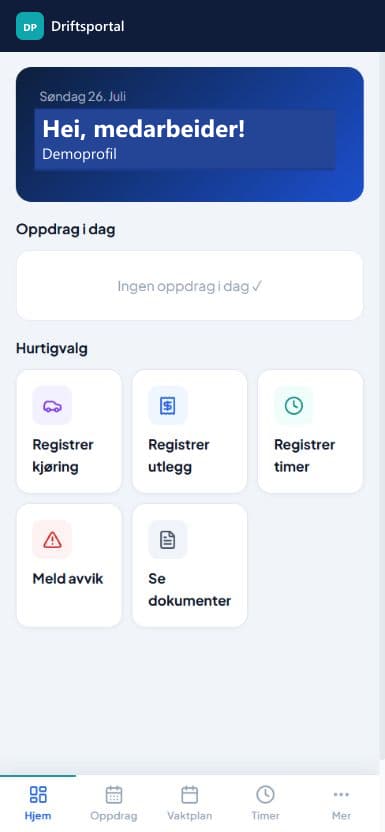
The solution consists of a public website with booking, an admin system, and a separate portal for employees.
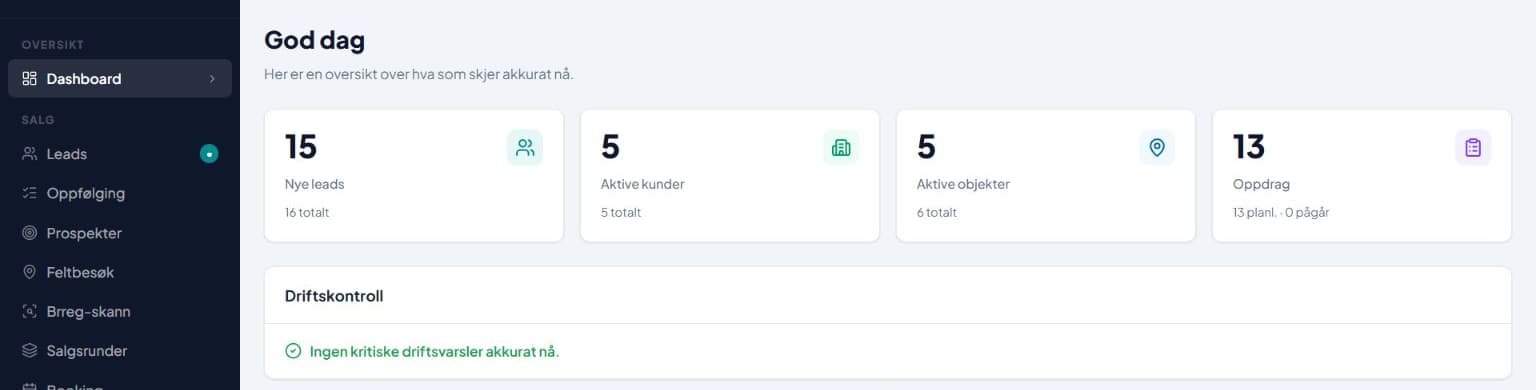
From sales to completed work
An important part of the work has been getting the different parts of the business to connect.
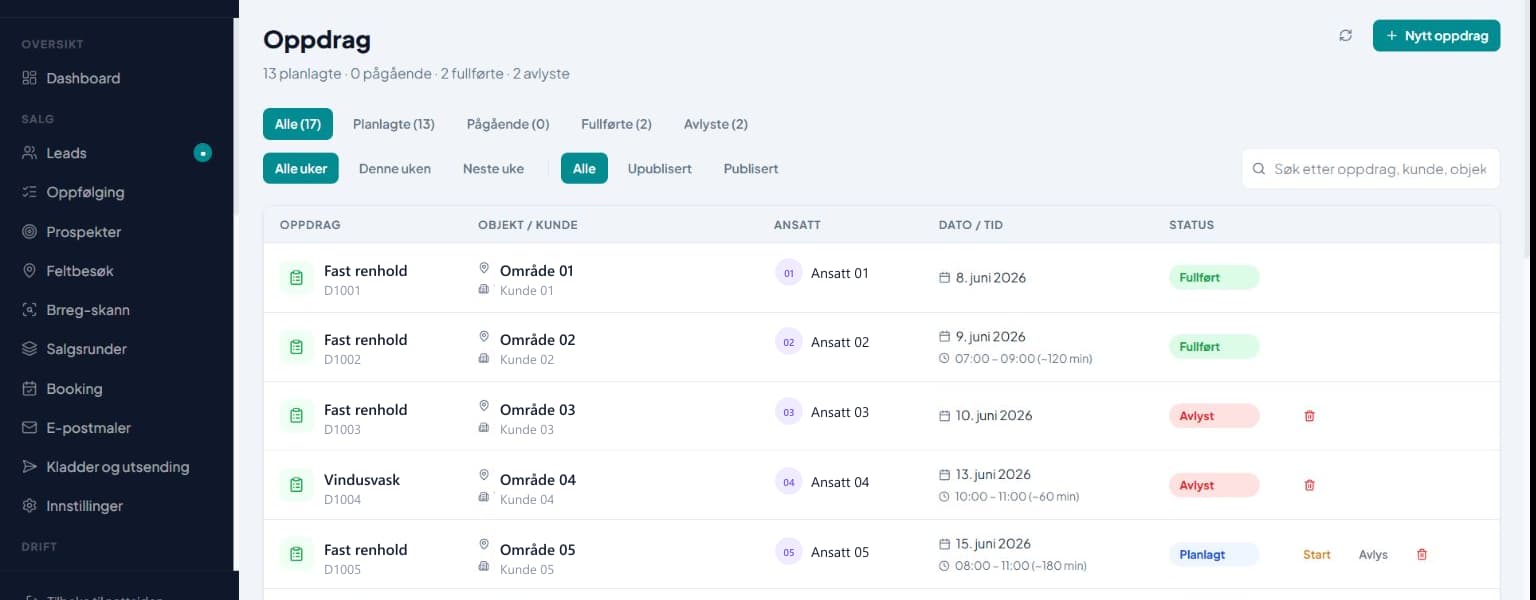
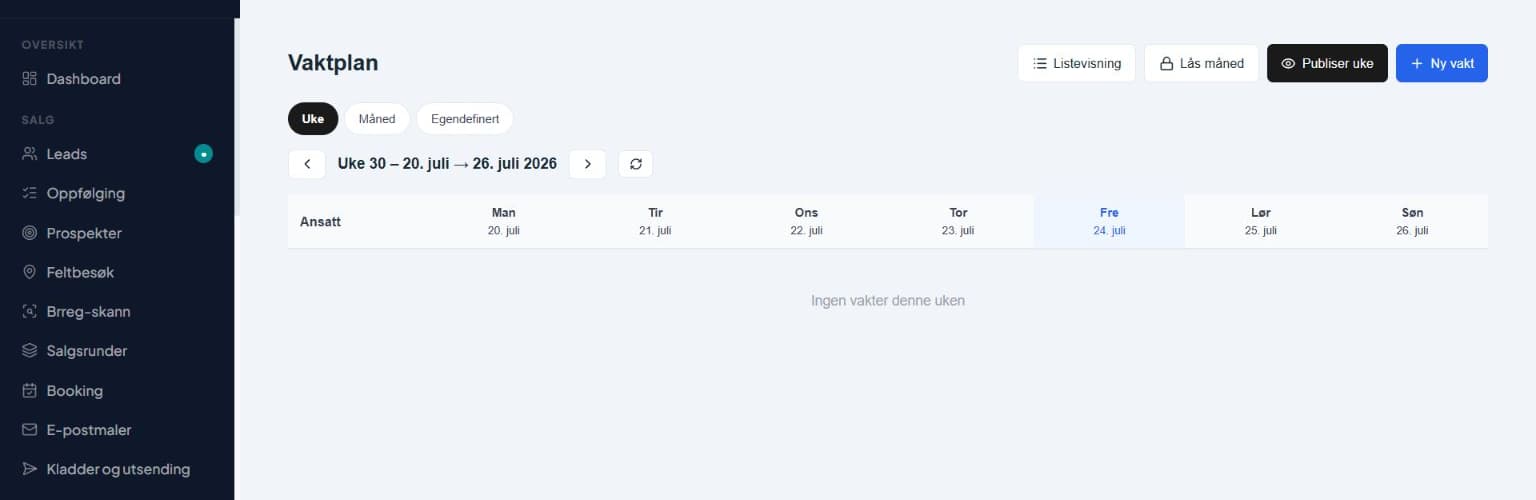
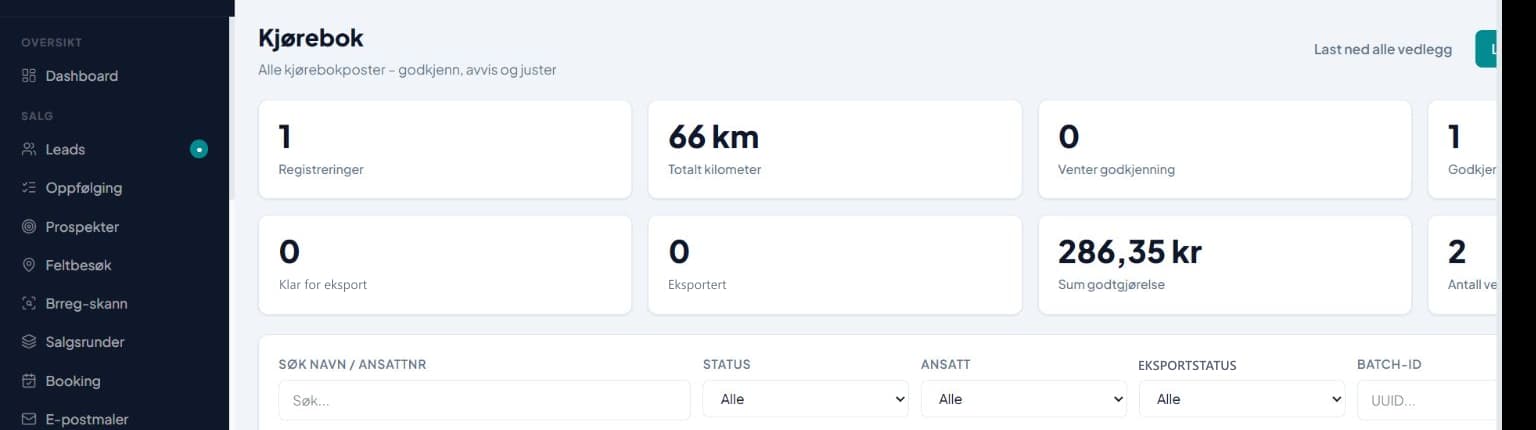
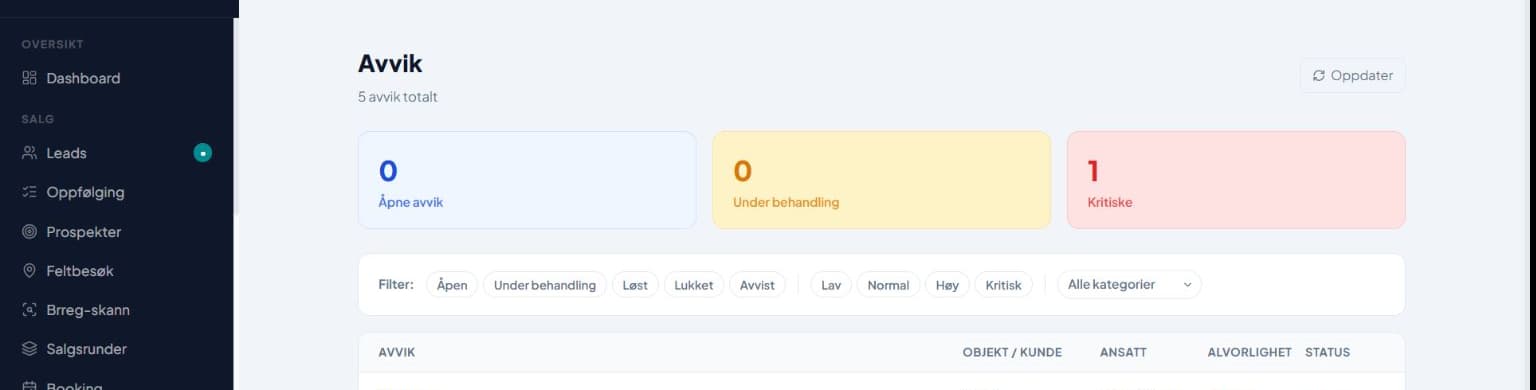
A lead can be followed up and converted into a customer. The customer can be linked to cleaning objects and planned work. Shifts can be set up and assigned to employees, while employees get access to their own tasks and can register time, mileage, expenses, checklists and deviations.
Administration can then follow up and approve that information in the same system.
This is the part of the project I think matters most. The platform is not built as a collection of separate dashboards. The workflows follow the actual operation, from first customer contact through to work, documentation and control.

My role
My role covered product decisions, structure, design and development.
A large part of the work was understanding how the business operates in practice, then translating that into concrete workflows and system rules: what a shift needs before it can be assigned, when a mileage entry needs approval, what a checklist requires before an object is marked done.
That covered CRM and customer follow-up, shift planning, the employee portal, document access, quality controls, deviations, mileage, expenses, sales follow-up and analysis.
I also structured the less visible parts of the solution, such as access control, validation, conflict checks, calculations and testing, and validated that the results held up against the automated test suite.
Technical
The platform is built with Next.js, React, TypeScript and Supabase PostgreSQL.
AI-assisted development tools were used actively throughout the project, including for development, debugging, research and review. Product decisions, workflow design, verifying the results and deciding what should actually be built remained my responsibility.
The verified portfolio version passed 458 automated tests, a TypeScript check and a production build.
Looking back
What I am most satisfied with in this project is not the number of features. It is that the system has grown around real problems that come up when a small business has to handle sales, employees and daily operations at the same time.
The hard part was rarely the code. It was translating how the business actually operates into workflow states, rules and validation, and then checking that the result behaved the way real cleaning operations require, not just the way a demo would.
The screenshots come from the actual solution. Where production information was visible, the content has been replaced in the image files with fictional data. Production data was not changed.